
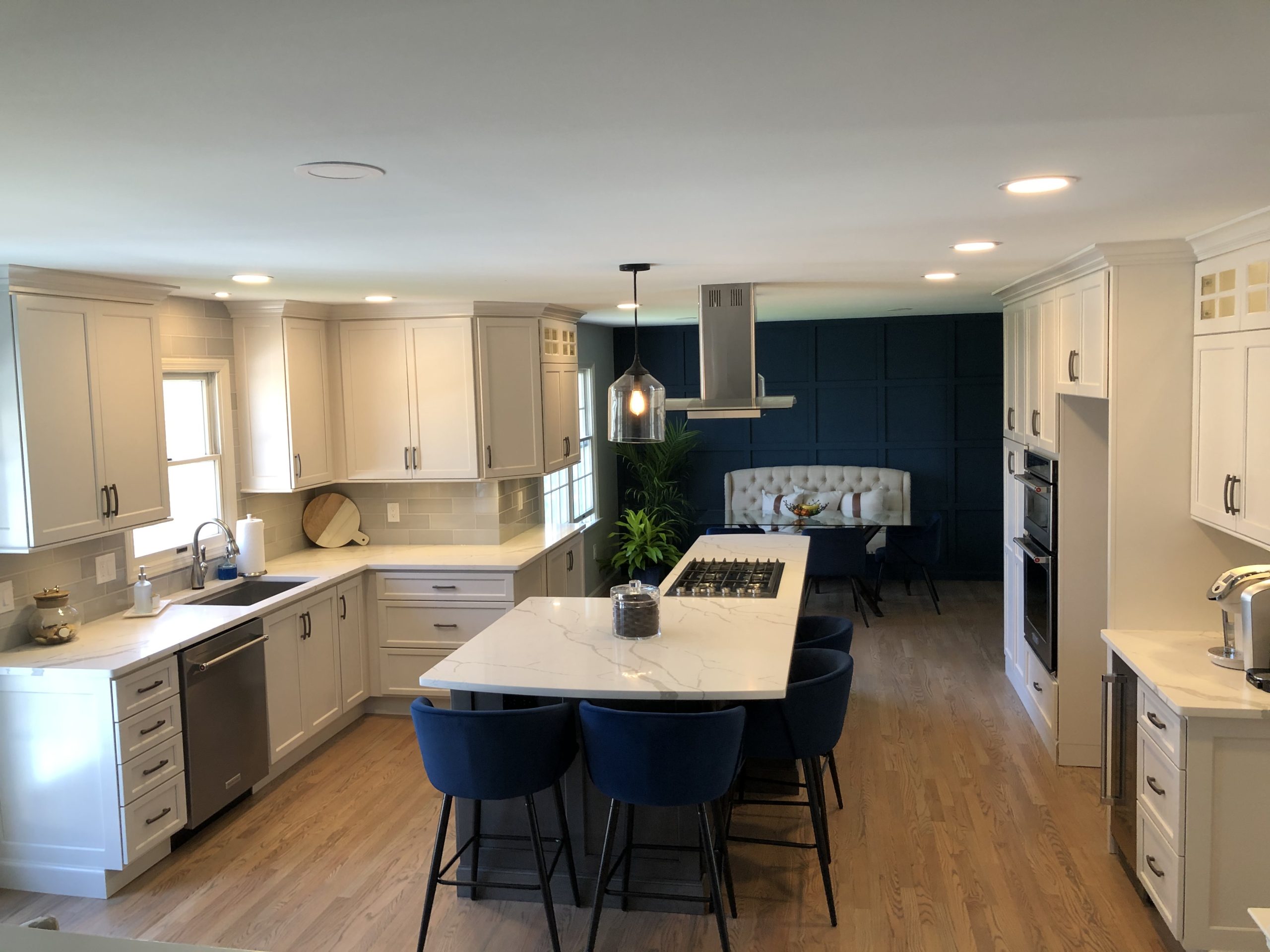
Choosing a kitchen remodeling contractor comes down to a short checklist you can run on any candidate: verify the license and insurance, check professional credentials, require a written contract with a clear payment schedule, look at a portfolio of local projects, and get references from the last 12 months. A forum thread won't give you this; a contractor who can walk you through each item will.
The checklist
- License and insurance — confirm the contractor is licensed for the work and carries liability and workers' compensation insurance. Ask for the license number and the insurance certificate, not just a verbal claim. This is the first filter: if a contractor can't produce these, stop.
- Professional credentials — look for a recognized credential like an NKBA Certified Kitchen Designer (CKD) or NKBA membership. A credential is a signal that the designer has been trained and held to a standard, not just a general contractor who happens to do kitchens.
- Written contract and payment schedule — the contract should spell out scope, timeline, payment milestones, and what happens if the schedule slips. A contractor who won't put the timeline and payment schedule in writing is a risk you're taking on yourself.
- Portfolio of local projects — ask to see finished kitchens in the area, not just stock photos. Local work shows the contractor's actual craftsmanship and how they handle the specific conditions of homes in your region.
- References from the last 12 months — ask for two or three recent clients you can call. Ask specifically: did the project finish on schedule, was communication consistent, and would they hire the contractor again? Recent references are the most honest signal of how the contractor actually operates.
What a good contractor does differently
The checklist above is the floor. A contractor who's good at the job also does these things, and you should expect them:
- One designer, start to finish — the person who designs the kitchen is the person who manages the build. No hand-off to a rotating crew of subcontractors. This is how the details get done right.
- A written timeline with the lead time called out — the cabinet order date and countertop templating date are named explicitly, so you know where the 8-to-16-week cabinet lead time sits before you commit.
- 3D design before the build — the kitchen is modeled in professional design software so you can see and refine every detail before anything is cut. You're not guessing at the finished result.
- Transparent material sourcing — the contractor tells you the actual cabinet lead time from their current suppliers, not a generic range, so the schedule is real.
What to watch for in the first conversation
- They ask about how you live, not just what you want — a good designer asks how you cook, gather, and use the room before talking style.
- They give you a number, not a range — a contractor who can give you a specific timeline and a specific cabinet lead time is working from real supplier data, not a generic guide.
- They're accountable for the whole project — one team, one point of contact, one person who owns the schedule from demo to final walkthrough.
Mac Kitchens, against the checklist
Here's how Mac Kitchens measures against the checklist:
- License and insurance — licensed and insured; we'll provide the license number and insurance certificate on request.
- Credentials — Doug MacGeorge is an NKBA Certified Kitchen Designer (CKD) and NKBA member.
- Written contract and payment schedule — every project gets a written contract with a named timeline and payment milestones.
- Local portfolio — fifty years of finished kitchens across the Lehigh Valley, shown start to finish on our projects page.
- Recent references — we'll connect you with recent clients.
Book a private consultation or call the studio at (484) 680-5167 — we'll walk you through the checklist with your specific project.